

Introduction
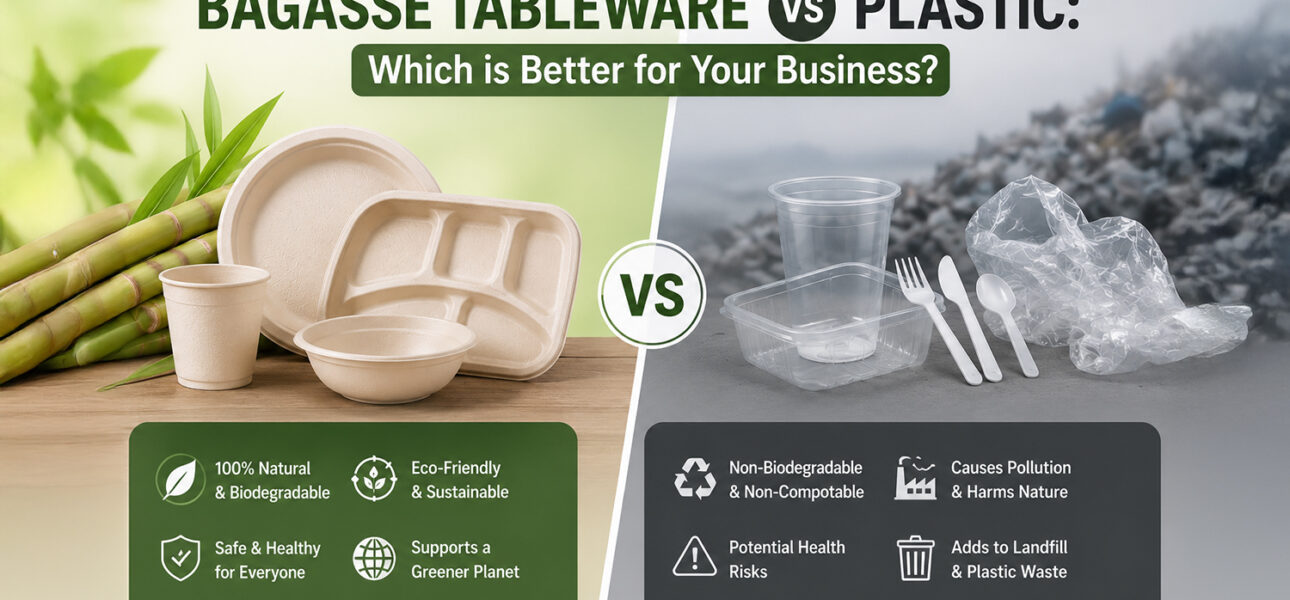
Choosing the right packaging material is crucial for any food business. With increasing environmental concerns, many companies are comparing bagasse tableware vs plastic to make better decisions.
1. What is Plastic Tableware?
Plastic tableware is widely used due to its low cost, but it creates serious environmental problems as it takes hundreds of years to decompose.
2. What is Bagasse Tableware?
Bagasse tableware is made from sugarcane waste and is completely biodegradable and compostable. It is designed to offer a sustainable alternative to plastic.
Key Differences:
1. Environmental Impact
- Plastic: Causes pollution and landfill waste
- Bagasse: Decomposes naturally and is eco-friendly
2. Durability
- Plastic: Strong but harmful
- Bagasse: Strong, sturdy, and safe for food use
3. Market Demand
- Plastic: Strong but harmful
- Bagasse: Strong, sturdy, and safe for food use
4. Business Value
- Plastic: Negative brand perception
- Bagasse: Enhances brand image and sustainability


Why Businesses Are Choosing Bagasse
Food businesses, restaurants, and distributors are shifting toward bagasse products to meet customer expectations and comply with environmental laws.
Conclusion
While plastic may seem cheaper initially, bagasse tableware offers long-term advantages in terms of sustainability, brand value, and market demand.
Start Your Sustainable Journey
Partner with a reliable exporter to source high-quality bagasse tableware and stay ahead in the growing eco-friendly market.